

Digital drought
The price of our frictionless life: AI's thirst, fragmented stories and the dark utility of martyrs.


We live in a world of sleek surfaces and instant gratification.
But beneath lie the nuanced fault lines that shape our culture.
My investigations this month start by tracing AI’s insatiable thirst back to the communities feeling the ecological stress. I then analyse how geography influences the games we play.
I look at the tug-of-war in storytelling between personalisation and universality. In lifestyle, I examine the dissolved boundaries of work culture. Finally, I examine the useful dead and the exploitation of martyrs.
Join me in decoding our noisy world.
Media & technology

Digital drought
The price of AI’s thirst.
Behind the frictionless interfaces and generative outputs of artificial intelligence hides its earthly enabler: water. The data centres powering tools like ChatGPT, Gemini and Midjourney are vast, energy-hungry systems that require enormous amounts of our most precious resource to stay cool.
A technology celebrated for its abstraction is rooted in the material world. It’s a reminder that “the cloud” is anything but ethereal. Every prompt, image or chatbot response has a hidden footprint that is felt most by communities far removed from Silicon Valley.
The demand is accelerating. From 2016 to 2024, Google saw a staggering 340% increase in water use at its data centres. In areas where these facilities are built, this demand compounds existing local water stress. In Iowa, consumption has been reported to be over 700,000 litres of water a day for cooling alone. That’s equivalent to the entire daily water consumption of 900 average homes.
“We treat AI as a metaphor for limitless intelligence, when in reality it depends on our very limited resources.”
This trend is fuelling ethical and strategic problems. The exponential growth of AI means that a universal public utility, water, is being quietly appropriated to subsidise corporate technological advancement. Projections suggest that data centres in the U.S. alone could consume between 150 and 180 billion litres of fresh water annually by 2028. This presents a zero-sum game, pitting the development of complex algorithms against the fundamental needs of agriculture and local populations in already dry regions. The question isn’t only about environmental impact but cultural mindset. We treat AI as a metaphor for limitless intelligence, when in reality it depends on our very limited resources.
Despite the environmental gravity, media exposure to this subject remains low, focusing instead on ethical issues like bias or job displacement. This lack of scrutiny allows the infrastructure to continue its silent consumption.
It would be revealing to see a counter that displays the real-time water consumption for every AI interaction. How much water does a single query or image generation “drink?” This concept of a “water cost per search” would materialise the abstract environmental impact for billions of users. However, AI companies have been reluctant to make this information public, preferring to keep the physical price of the cloud opaque.
True progress in AI must factor in the concept of water efficiency. A genuine solution requires industry-wide transparency and regulation, forcing the designers of AI models to treat water consumption as a core metric of performance. The next great leap in intelligence may not come from making machines think faster but from learning to align progress with planetary boundaries, ensuring that the digital future isn’t built on a foundation of ecological drought.
Sport
Where the game lives
The intrinsic link between where you live and what you play.
The geography of sport tells a story of identity and infrastructure. In dense urban centres, the scarcity of large, open space pushed working-class communities toward sports requiring minimal setup, such as boxing or five-a-side football. This stands in sharp contrast to the vast, private land required by elite sports like polo or golf. Thus, geography determines not just what is played, but who gets to play it.
There is also the indelible mark of history, particularly empire’s legacy. Sports like cricket and rugby were exported globally, serving as tools of cultural integration and control through the public school system and colonial administrative networks. This imperial architecture explains why these traditionally British pastimes remain so deeply entrenched in the national sporting identities of former colonial territories, from India to Australia.
Domestically, there is the powerful intersection of geography and class. In the UK, the facilities and coaching inherent in the private school system disproportionately funnel talent into resource-heavy sports. Social class can, therefore, act as a profound barrier. Access to elite pathways is often determined less by talent and more by the physical proximity to, and affordability of, resources.
“The priority must be to dismantle the prohibitive costs and accessibility barriers that dampen opportunities for all.”
This reflects a deeper, economic geography at play. The sporting landscape reflects the global flow of capital as much as culture, with elite league teams disproportionately concentrated in big metropolitan centres. These areas provide greater financial muscle, better infrastructure, and broader talent pools, creating an inherent geographic imbalance in opportunity.
The challenge is how to reconcile these deep-seated geographical and class barriers with the ideal of universal participation. If geography determines who gets to play, then the priority must be to dismantle the prohibitive costs and accessibility barriers that dampen opportunities for all. This requires a shift away from the legacy structures, focusing instead on subsidising participation at the local level.
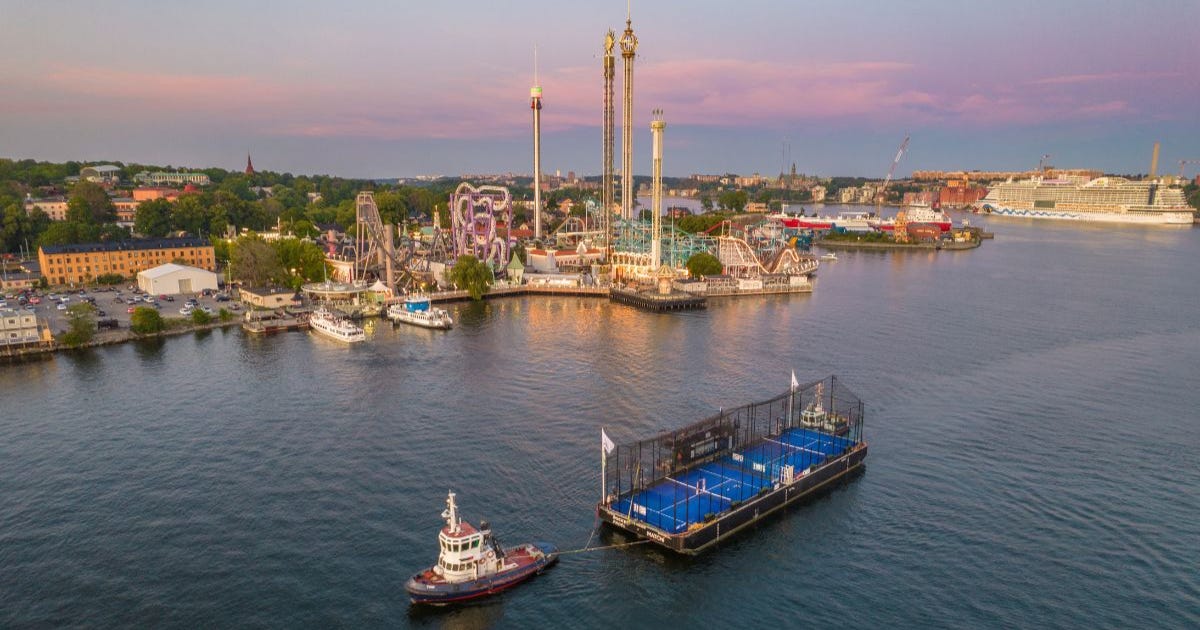
Yet, the task of global expansion is far from impossible. While many sports are culturally entrenched, others are rapidly gaining a foothold in unlikely places. Consider the explosive rise of Padel. Its success is a lesson in accessibility: the sport requires only a small, enclosed court, making it easy to install in urban environments. Its low technical barrier to entry - being simpler and less physically punishing than tennis makes it inclusive. Padel’s swift growth across the UK, Europe and the Middle East proves that where a sport is designed for convenience, it can bypass traditional, expensive infrastructures.
The success of this type of expansion proves that while history and geography shape the starting line, strategic investment in accessibility and community development can profoundly redraw the global map of sport. Challenging sport’s prohibitive nature means transforming the game from a reflection of elite geography into a true tool for global cultural connection and social mobility.
Storytelling

The fragmentation of shared stories
A tug-of-war between personalisation and universality.
In the age of digital abundance, personalisation tailors content to individual tastes, offering each reader or viewer a bespoke narrative of the world. Meanwhile, universal stories, grounded in human experiences and emotions, form the connective tissue of society.
Personalisation promises heightened relevance, creating a sense of recognition. Digital platforms excel here, delivering creatives to micro-audiences. For those who crave recognition of their identity, this type of storytelling is both empowering and addictive. Your own tastes are perpetually validated, reinforcing what we already believe and enjoy.
The economic engine driving this is clear: personalised feeds boost engagement, which increases ad revenue and platform loyalty. The clearest embodiment of this is a social media feed or a music service, where the endless scroll tailors itself so precisely that it becomes a mirror, reflecting only the user’s existing opinions.
“While an algorithm can predict what we want to see, it rarely exposes us to challenging or unfamiliar ideas that foster empathy.”
However, there is a cost to this constant validation. The emphasis on the hyper-personal risks diminishing our shared cultural vocabulary - the common ground necessary for collective dialogue. When everything is tailored to the individual, the experience becomes atomised. Contrast this with previous generations, where millions watched the same television event, perhaps a major royal wedding or the finale of a popular sitcom.
Now, when a person references their latest discovery, the likelihood that their colleague or neighbour has seen it is statistically low. We lose what sociologists call “cultural fluency.” This is the ability to reference a common set of myths, historical figures or TV shows that everyone understands, providing context for public discourse. The universal stories that once bound societies together (tales of love, loss, betrayal, redemption) risk becoming niche interests in a marketplace of segmented identities.
The drive towards hyper-personalisation risks fostering echo chambers, which diminishes shared cultural experiences and fragments the common narratives required for social cohesion. Universal stories, by inviting diverse perspectives, can spark the conversations and cultural moments that shape broader understanding. While an algorithm can predict what we want to see, it rarely exposes us to challenging or unfamiliar ideas that foster empathy.
The most impactful stories often blend both: specificity that illuminates the universal. A memoir about one family’s struggle with disability can become a lens to examine love, care, resilience and identity for readers from all walks of life. The healthiest storytelling environment then is one that balances relevance with universal truths.
Lifestyle

The cult of productivity
Why the drive to integrate work and life has sparked a pushback for boundaries.
Work was once a distinct activity contained by fixed hours and locations. Today, that structure has shifted. Professional achievement is often linked to personal identity, moving work from something we do to something we are. This blurring means time off can be framed as a “recharge” for optimising future output.
This change was accelerated by the rise of remote and hybrid models. While promising flexibility and work-life balance, they have also ushered in a new reality of constant connection. The traditional boundaries that separated professional and personal life dissolved, leading to the challenge of managing ever-present work demands.
This dynamic is particularly apparent in tech and finance. Here, the hustle culture has long been a badge of honour, glorifying overworking rooted in the belief that success requires relentless self-sacrifice. This stands in sharp contrast to parts of Europe, where the “right to disconnect” is legally enshrined, reflecting a prioritisation of leisure and family time. In Anglo-American contexts, that “boundary creep” - the work phone becoming an inescapable tether - can be treated as a sign of dedication.
This pressure cooker environment is meeting resistance. Gen Z and younger millennials are re-evaluating the role of work. They prioritise psychological safety, flexibility and ethical alignment over purely financial or hierarchical ambition. This mindset fuels movements like “quiet quitting,” which is a pushback against a system that equates non-stop busyness with personal value. It’s a demand for sustainability over exhaustion.
Where does work culture go from here? The future demands a compromise: flexibility must be paired with boundaries. Companies that want a competitive advantage must make systemic investments in their cultural foundations. This means that culture must be seen as a leadership strategy, not just an HR initiative.
C-suites who proactively shape a workplace environment where employees feel valued and supported will spur stronger engagement and retention. This also means adapting to the automation wave by investing in upskilling and prioritising uniquely human skills like critical thinking and emotional intelligence.
History

The useful dead
How societies exploit martyrs.
From religious saints to political radicals, the figure of the martyr embodies the ultimate act of conviction: dying for what one believes. Across history, the meaning of this sacrifice has altered from moral example to ideological weapon. This evolution tracks humanity’s priorities, from the spiritual sanctity of the church to the maximalist demands of the modern state.
In early religious traditions, martyrdom was understood as the ultimate witness. While depicted as passive endurance against persecution, the concept’s ancient origins were sometimes linked to aggressive zealotry and the glorification of violent self-sacrifice. Figures like St. Stephen in early Christianity or, centuries later, Joan of Arc, represented faith’s triumph over overwhelming oppression, their public deaths meant to inspire profound courage and imitation within communities. Their stories created a powerful, unified narrative: one could withstand any earthly torment if your conviction was pure. Their sacrifice was personal, spiritual and a source of moral strength, often challenging the power of the state.
“The true lesson lies not in glorifying those who die for a cause but in understanding why societies still demand such sacrifices.”
However, as the concept moved into the modern, secular sphere, its symbolism was appropriated. Martyrdom became inextricably tied to nationalism, revolution and political ideology. The sacrifice was no longer an act of personal faith but a tool for collective mobilisation. The Nazi party deliberately manufactured figures of sacrifice, such as Horst Wessel, whose death was rewritten to serve as state propaganda, transforming a complicated biography into a simple, useful rallying cry for ideological purity and vengeance. The political utility of martyrdom lies in its simplicity: it offers irrefutable proof of a principle’s worth by choosing death over renunciation, allowing movements to bypass complex debate.
The online era has transformed this concept again, immortalising the fallen instantly. The speed of digital canonisation means the emotional power of the sacrifice is mobilised immediately, before the full context or complexity can be understood. Anyone can die “for a cause,” whether in protest movements or the polarised trenches of the culture wars. This immediacy allows maximalist positions to be justified, uniting specific communities around a narrative of persecution.
This evolution reveals something unsettling about how societies construct meaning. Martyrs remind us of humanity’s hunger for purity in a nuanced world. They turn suffering into narrative and death into purpose. Yet when martyrdom becomes spectacle, it becomes a tool to silence dissent and justify vengeance in the name of avenging the “holy sacrifice.” Perhaps the true lesson lies not in glorifying those who die for a cause but in understanding why societies still demand such sacrifices.
Rhymes
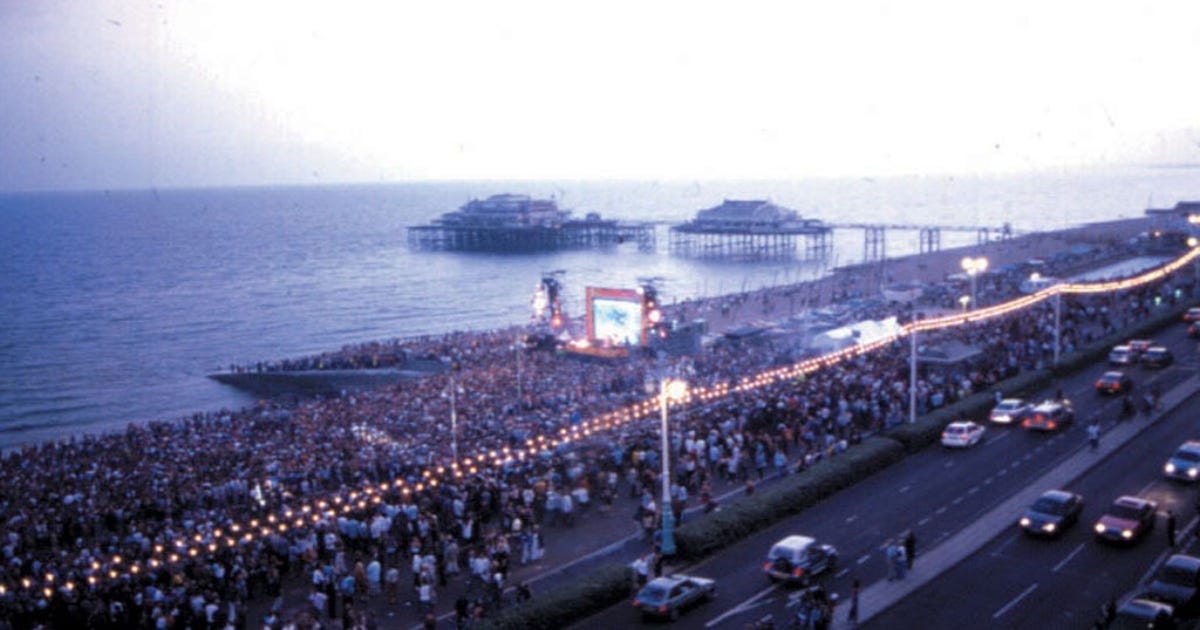
A 1972 folk-pop jingle that became a cult classic in early electronic and hip-hop sampling:
Which influential electronic artist famously used its distinctive acoustic riff as the rhythmic foundation for his 1999 track?
Drop your guess below.
Did something here resonate or spark a thought? I’d love to hear from you in the comments.
If you enjoyed what you read, please spread the word by subscribing, engaging and sharing it with your network.
Stay curious. Culture awaits.
Until next time,
George
This is the kind of stuff people don't talk about. And most don't know about, but I often question if we try hard not to focus between the lines, or maybe years of surface-level distractions helps us automatically do so. There's a lot to unpack here. I thoroughly appreciate your knowledge and ability to bring it to light! Wonderful read.